Boca Raton country club communities are really several different markets wearing the same name. A gated golf community near the Intracoastal offers a different lifestyle and membership structure than an estate-scale club in west Boca Raton, and getting that distinction right is what separates a home you love from a purchase you endure. This guide compares the city's best-known private clubs, explains the difference between the gate and the membership, and gives you the questions that matter before you decide.
What country club living actually means
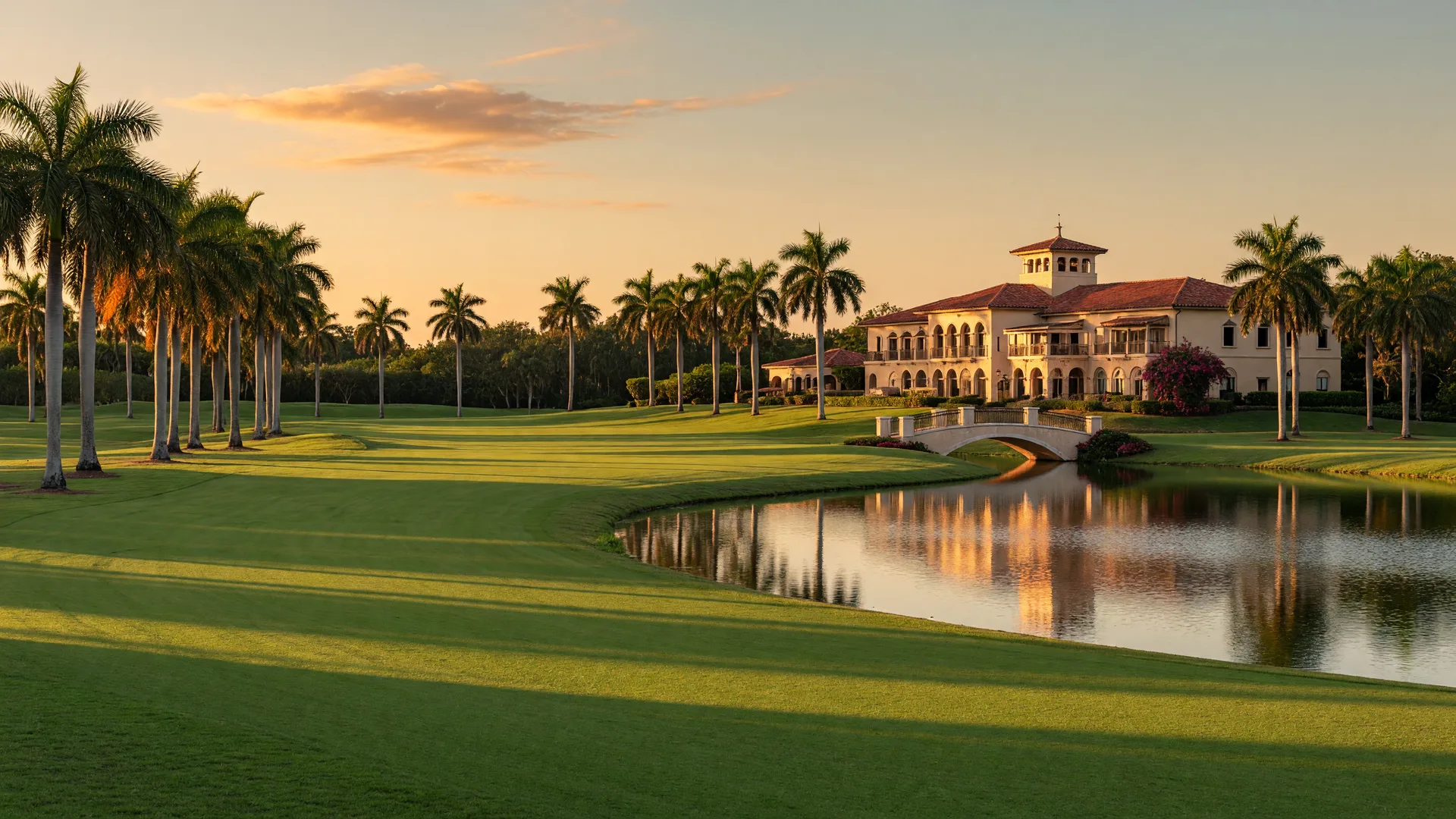
In Boca Raton, the phrase country club living covers two different things that usually come together but do not have to. A gated community controls who enters the neighborhood. A country club membership controls who uses the golf, tennis, dining, fitness, and social amenities, and it may be mandatory with the home, voluntary, or tied to an equity purchase. Some gated communities have no club at all, and some clubs have no gate. When buyers say they want country club living, they usually want both: the security and landscaping standards of a managed community, plus the amenities and social rhythm of a private club.
Location still matters even inside the club world. The east-side communities sit close to the Intracoastal, the beach, and the restaurants of East Boca, while the west-side clubs trade that proximity for larger campuses and quieter roads. Neither is right for everyone, and the club you choose quietly dictates your daily driving, your water views, and who your neighbors are.
The combination is one of the reasons Boca Raton became a destination for luxury buyers in the first place. The city's club communities matured over decades, so the clubs read as established rather than new-build: mature landscaping, settled membership, and a rhythm that runs from morning golf to evening dining. For buyers coming from the Northeast, Europe, or Latin America, that sense of established community is often exactly what relocation is missing.
Royal Palm Yacht & Country Club
On the east side, just west of the Intracoastal Waterway south of Camino Real, Royal Palm is the city's oldest major club community, founded in 1959 by Arthur Vining Davis, a former chairman of Alcoa. It pairs championship golf with a full-service marina, which makes it the natural fit for buyers who want both a game and a boat. The estate homes sit behind a gate on more than six hundred acres, and the community's character is quiet, established, and club-forward: the yacht club and the golf club anchor the social life. If you want to keep a boat at your community and play golf afterward, Royal Palm is usually the first conversation to have.
Boca West Country Club
Out west, Boca West is the scale play. Founded in 1976, it is one of the largest private club properties in the country, roughly eighteen hundred acres with four championship courses, seventy-two holes shaped by Arnold Palmer, Jim Fazio, and Pete Dye. That much golf means the tee sheet has room for residents and seasonal members alike, which matters to buyers who want flexibility rather than a waiting-list culture. The campus also carries deep amenity infrastructure, from multiple dining venues to tennis, pickleball, and fitness, so it suits buyers who want the club to function as a small resort they happen to live in.
St. Andrews Country Club
For estate-scale, resident-only living, St. Andrews, founded in 1982, is the club buyers compare against the others. Its two championship courses include an Arnold Palmer Signature Design, and its roughly seven hundred estate homes sit on a campus of similar size in west Boca. Membership is resident-only, which means the club belongs to the people who live there, and the community is smaller by design than Boca West or Broken Sound. Buyers who want a true neighbors' club where everyone knows one another, and who are comfortable with an equity commitment, tend to land here.
Broken Sound Country Club
Broken Sound, founded in 1978, is the sports-and-social campus: twenty-eight residential villages with more than sixteen hundred homes wrapped around two championship courses. The Old Course carries real tournament pedigree, having hosted PGA Tour Champions events, and the club is known for strong golf, tennis, and dining programs run across a large, active membership. Because the community is so established and the amenities so broad, Broken Sound works well for buyers who want the energy of a big club without the anonymous feeling of a resort, and for part-year residents who want the club to feel alive whenever they arrive.
Woodfield Country Club
Woodfield, whose course opened in 1988, is the member-owned, family-focused option in central Boca Raton. It is not the biggest club, roughly eight hundred thirty acres, but it is one of the warmest: a community where families, multi-generation buyers, and first-time club members describe the culture as friendly rather than formal. The course began as a Joe Lee design and was later refined by Bob Cupp, and it stands up well for everyday play. For buyers who want the security and amenities of a gated club community with a more relaxed social temperature, Woodfield deserves a close look.
Gate versus membership: know which you are buying
Every one of these communities combines a gate with a club, but the economics work differently, and the difference changes your purchase. In some clubs, membership is mandatory and equity-based: you buy into the club when you buy the home, and you sell that interest when you sell. The price of admission is real, but so is the club's financial health, because the members own it. In others, membership is voluntary or tied to the home without equity, and the club charges dues you renew each year. Neither is better; they are simply different cost structures, and the structure affects resale because it changes the size of the buyer pool.
The same distinction applies to the gate itself. A heavily managed association with strong reserves protects resale value, but it also means rules: landscaping standards, exterior color approvals, rental limits, and seasonal-use policies. If you plan to rent the home when you are away, or if you are an international buyer spending part of the year elsewhere, the rental and occupancy rules deserve the same scrutiny as the club's membership terms. I check both sets of documents before you ever see a floor plan, and I verify current membership terms directly with the club, because fees and rules change and marketing materials lag.
Questions to ask before you choose
- Is membership mandatory, and is it equity? Mandatory equity clubs change the true cost of ownership and the pool of future buyers.
- How do you actually want to use the club? Seven-days-a-week golf, casual tennis, a marina, a fitness floor: each club weights these very differently.
- What is the resale pattern? Some communities turn over quickly and predictably; others take longer because the buyer must want the club, not just the house.
- Are you buying the club first and the house second? Start with the lifestyle, and the neighborhood will follow.
- What are dues, assessments, and initiation structures today? I verify current terms with the club before you make any decision, because what you read online is often out of date.
The home inside the gate needs the same care
None of this changes the fundamentals of the home purchase itself. A house in a country club community still needs the same due diligence as any luxury home in Boca Raton: association finances and reserves, flood zone and insurance requirements, wind and homeowner coverage, and a clear picture of taxes and carrying costs. Club communities add one layer, the membership, on top of a process that already rewards careful work. I have walked buyers through every one of these steps many times, from the first tour to the closing table, and the calmest purchases are the ones where the documents were read before the offer.
The lifestyle itself follows the calendar in a way outsiders do not always expect. From late fall through spring, the clubs fill with seasonal residents, dinner reservations go quickly, and the social calendar becomes dense; through the summer, the same clubs settle into a slower, more local rhythm. Buyers from northern climates sometimes worry the community will feel empty during their months away. In practice, the established Boca clubs keep a strong permanent membership that keeps the club alive year-round, and that balance between a full winter season and a quieter summer is part of what owners come to love.
I know this territory from both sides. I grew up in France, spent years in Manhattan hospitality, and now help local and international buyers find their way into Boca Raton's club communities, where languages and lifestyles mix more than people expect. The right next step is a conversation about your lifestyle, your timeline, and your goals, and I will match you to the communities worth visiting. Reach me through the contact page to schedule one, and bring your list of questions: the honest answer about which club fits you is the most useful one.
Jean-Luc Andriot
Luxury Realtor, Boca Premier Property Group at Keller Williams Realty Services, Boca Raton. Serving Boca Raton, Highland Beach, Delray Beach, Hillsboro Mile, and Gulf Stream.